Oil prices jumped to their highest since 2022 after a report that the US military is set to brief President Donald Trump on new plans for potential action in the Iran war.
US Central Command has prepared a plan for a wave of “short and powerful” strikes on Iran to try to break the deadlock in negotiations with Tehran, news site Axios reported. The BBC has contacted US Central Command and the White House for comment.
Brent crude rose by almost 7% to more than $126 (£94) a barrel at one point, the highest since Russia’s full-scale invasion of Ukraine.
Energy prices have risen this week as peace talks appear to have stalled, with the key Strait of Hormuz waterway still effectively closed.
After reaching $126.31 a barrel in Asian trade, the price of Brent crude fell back to around $116 in European trade.
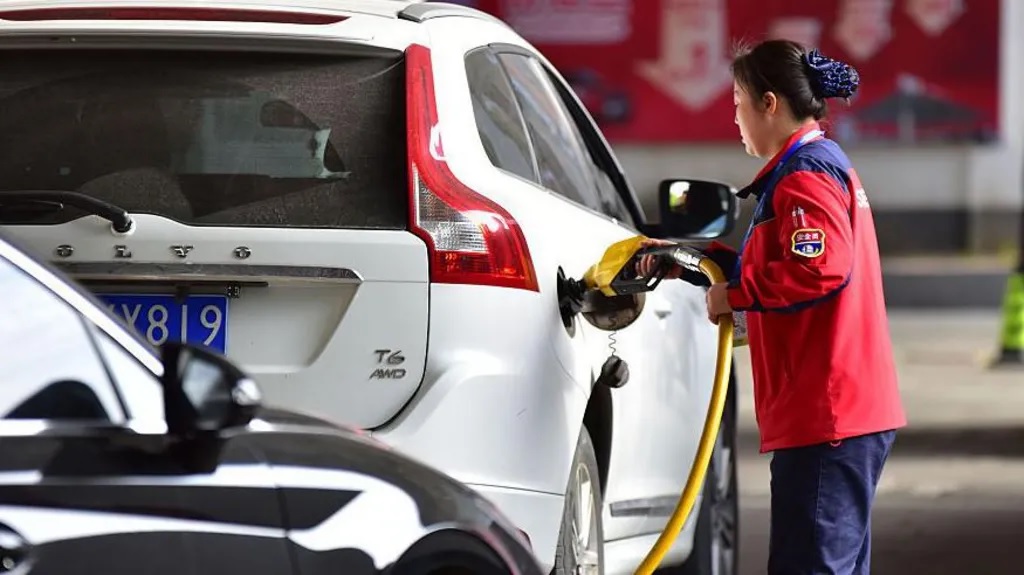
Crude oil is a key ingredient in petrol and diesel, and the jump in costs since the start of the Iran war has pushed up pump prices for motorists.
The potential impact is wider than just petrol and diesel prices. The UK government has warned people could face higher energy, food and flight ticket prices as a result of the war.
Some airlines have already started to raise fares or reduce flights. Fertiliser prices have also started to increase, which could have a knock-on effect on food prices.
Another plan focused on taking over part of the Strait of Hormuz so that it can be reopened for commercial shipping, Axios reported, adding that doing so could involve troops on the ground.
Meanwhile, a statement attributed to Iran’s Supreme Leader Mojtaba Khamanei said that Tehran would secure the Strait of Hormuz and eliminate “the enemy’s abuses of the waterway”.
Khamanei’s statement on Thursday also said a “new chapter” for the region had been taking shape since the start of the US-Israeli war with Iran on 28 February.
The current Brent futures contract for June delivery is due to expire on Thursday. The more active July contract was trading at around $110 a barrel.
Futures contracts are agreements to buy or sell an asset at a set date.
The US said it would blockade Iranian ports for as long as Tehran continues to threaten vessels that try to use the Strait of Hormuz, severely disrupting global energy shipments.
Iran retaliated against US-Israeli airstrikes by threatening to attack ships in the waterway, through which about a fifth of the world’s energy usually passes.
Oil prices had surged by 6% on Wednesday following reports that Washington was preparing for an “extended” blockade of Iran.