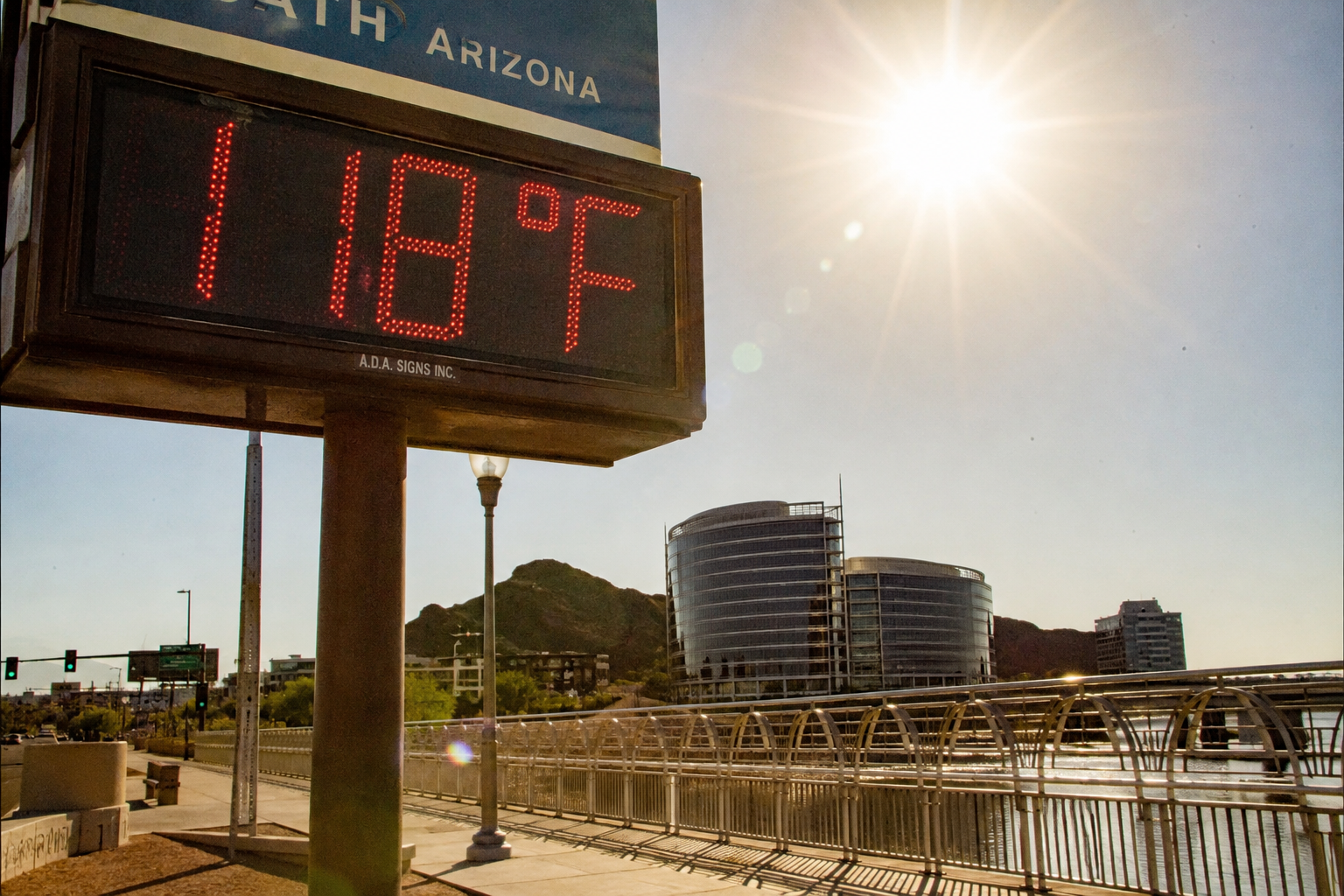
Record-breaking temperatures are transforming daily life as scientists warn America’s heat crisis will only intensify
Extreme heat is no longer an occasional emergency in Arizona — it is becoming a defining feature of everyday life. A new opinion piece argues that the state offers a disturbing preview of what more American communities could face as climate change pushes temperatures beyond historical limits.
The warning arrives after the contiguous United States experienced its hottest month ever recorded in July 2026. The national average temperature reached approximately 76.9 degrees, surpassing a record that had stood since the Dust Bowl era, with especially severe conditions reported across the Southwest and Mountain West.
Arizona residents are already being forced to reorganize their lives around the heat. Outdoor activities are increasingly limited to early mornings or evenings, while air-conditioning, reliable electricity and access to cooling spaces have become matters of personal safety rather than simple comfort.
The danger is far from over. An Extreme Heat Watch has been issued for the Phoenix area as temperatures are expected to climb to around 111 degrees, adding more strain to residents, outdoor workers, emergency services and the state’s power infrastructure.
Scientists say these events are becoming more frequent, intense and prolonged as global temperatures rise. The World Meteorological Organization has warned that climate change is raising the baseline from which heat waves develop, allowing already powerful weather systems to produce even more dangerous conditions.
The crisis also exposes a growing divide between those who can escape the heat and those who cannot. Families without dependable air-conditioning, people experiencing homelessness, older adults and workers required to remain outside face significantly greater risks as brutal temperatures settle in for longer periods.
Arizona’s experience is increasingly difficult to dismiss as an isolated desert problem. It is a warning that American cities must rethink housing, energy systems, worker protections and emergency planning — because the temperatures once treated as exceptional may now be the conditions communities are expected to survive every summer.