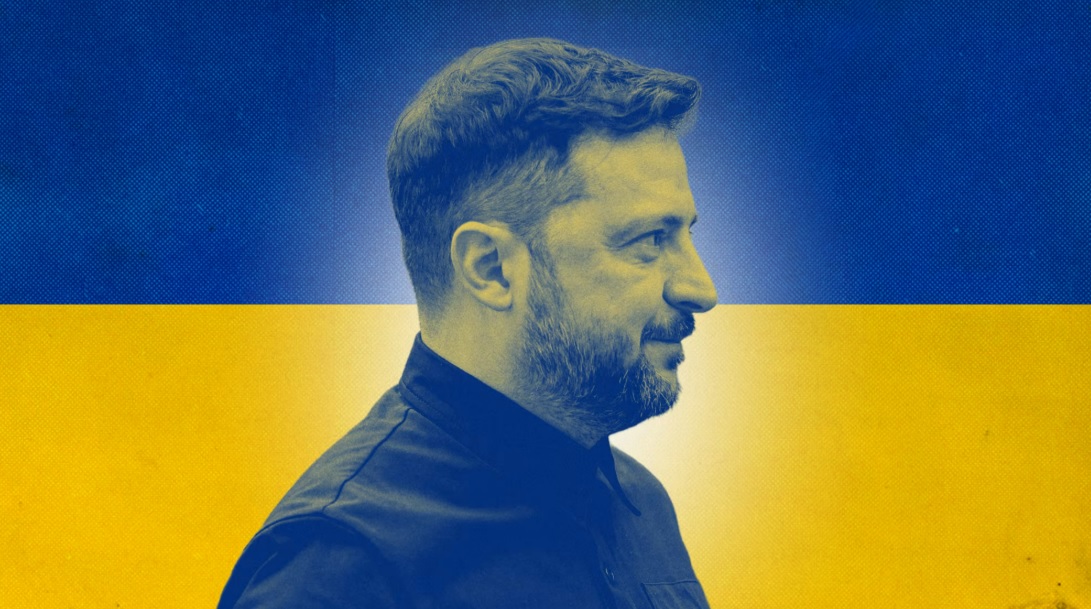
As Russian tanks rolled over the border in February 2022, rumors that Volodymyr Zelensky had fled Ukraine were rife. With Kyiv under heavy bombardment and Russia closing in, European leaders feared the worst. Then the Ukrainian leader posted a grainy video of himself standing in the dark in front of the presidency building, flanked by his top advisors, and announced simply: “We are here.”
Zelensky’s removal was a key part of Russia’s plan to take over Ukraine – a project Moscow expected to complete in days. He was to be taken or killed, unless he ran away first. A source close to the president told CNN that Russian agents had rented apartments in the immediate vicinity of the presidential office, with an order to eliminate him.
At one point early in the war, a joke went around that Zelensky became a comedian – the career he pursued before entering politics – because he was not afraid of bombing. In those early days, Zelensky’s uncanny capacity for survival and humor encapsulated the defiant mood of the country. The story as told by the Ukrainians, is that when the US offered to evacuate him, Zelensky shot back: “I need ammunition, not a ride.”
As Ukraine prepares to mark the fourth anniversary of Russia’s full-scale invasion on Tuesday, and with no end to the war in sight, Zelensky’s message hasn’t changed. He’s still there, having survived not only around a dozen Russian assassination attempts but also a corruption scandal that last year brought down his closest adviser, who stood beside him in that now-famous video, and two of his top government ministers.
For this assessment of Zelensky’s position, CNN spoke to some of those closest to the president – including his wife and his speechwriter – as well as diplomats and politicians from Europe and the US who have worked closely with him and his administration.
Many attribute his sticking power to his skills as a political operator, which, alongside his inspirational speeches, have earned him comparisons with Winston Churchill.
But like the British wartime leader who also led his country’s fight against a bigger, more powerful enemy, Zelensky has made missteps along the way and his future looks increasingly uncertain as the war grinds on. Even among the 60% of Ukrainians who say they trust Zelensky, only about half believe he should run for a second term.
Last July, Ukrainians took to the streets in rare wartime protests to push back against the government’s plans to weaken the independence of the country’s anti-corruption watchdogs. Zelensky was forced to make a U-turn and acknowledge public anger.
He repeatedly clashed with his former military chief, the hugely popular General Valerii Zaluzhnyi, finally sacking him in 2024 in what some saw as an attempt to neutralize his main political rival. More recently, he’s had to navigate a rocky relationship with a US president who has berated and humiliated him in front of the world.
Throughout, Zelensky has shown a feistiness that Bartosz Cichocki, Poland’s ambassador to Kyiv during the Russian invasion, believes likely comes from his childhood in one of the poorest parts of what was then the Soviet Union.
“During his childhood, in Soviet Ukraine, you had to prove your strength, particularly if you were little Jewish boy trying to prove to everyone around that you deserve respect, it explains a lot,” Cichocki said.
“He does not respect weakness, he can confront superior power, you need that when you have to confront bastards like (Russian President Vladimir) Putin and (his aide Nikolai) Patrushev and all that gang.”
But with the war showing no sign of ending, how long those qualities can keep him in power is an open question.
The years of pressure and heartbreak have taken a visible toll on Zelensky. His pre-war youthful and cleanshaven face is long gone, overtaken by worry lines and increasingly gray stubble.
He drinks a lot of coffee – black, no sugar – to get through the work day, which usually begins between 3 a.m. and 4 a.m., when the first battlefield reports start coming in. Zelenska told CNN that looking at her husband, it feels like the war has been going on a lot longer than four years.
She said that there has not been a single moment of complete happiness since the war started. That will have to wait until after the conflict is over. Instead, she focuses on brief moments of joy, such as when the family got a new puppy and brought it home for the first time.
“You can see that looking at him. But that is not as important as what he is going through on the inside, on an emotional level.”