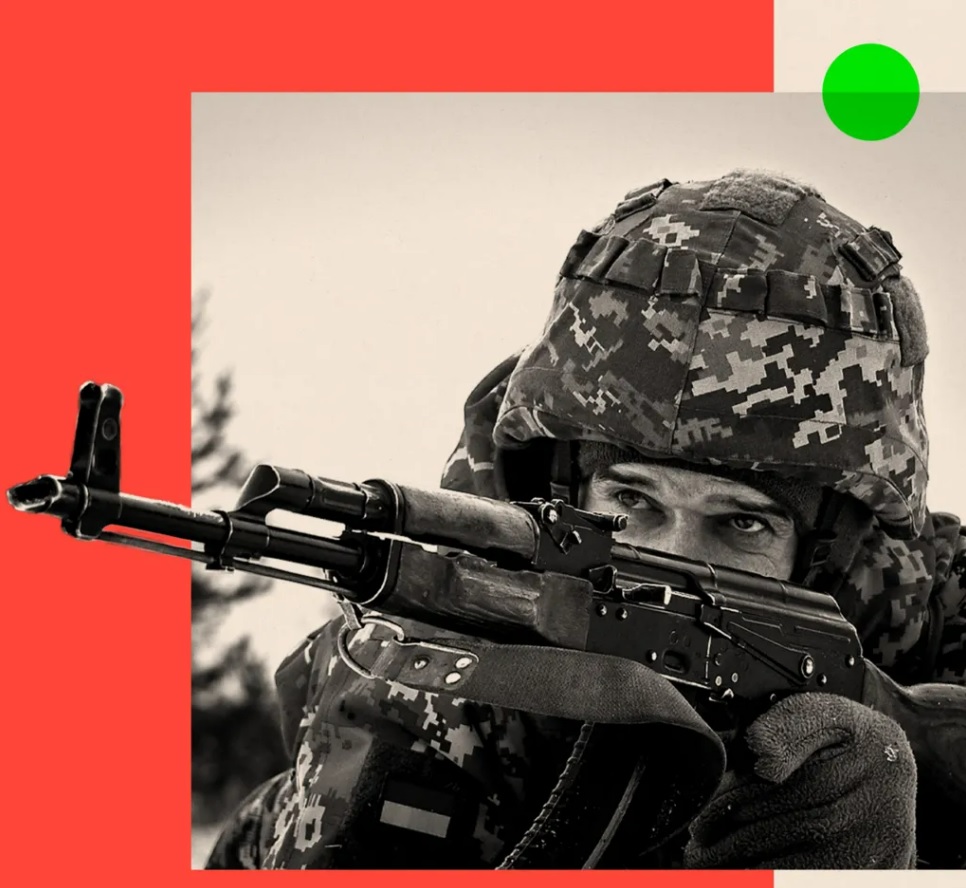
Ukraine and Russia have been fighting since 2014 when President Putin ordered the occupation and annexation of Crimea on the Black Sea and then seized parts of the Donbas in the east.
On this current trip, I have seen no evidence that the war is going to end soon.
The full-scale invasion four years ago was Putin’s attempt to eliminate the independence of Ukraine once and for all. He has said many times that history shows Ukraine belongs with Russia. A few days before the anniversary of the invasion President Zelensky dismissed that succinctly in a post on X: “I don’t need historical shit to end this war and move to diplomacy. Because it’s just a delay tactic. I read no less history books than Putin. And I learned a lot.”
Zelensky has weathered a corruption scandal that forced the resignation last autumn of his chief of staff, Andrii Yermak. He has trenchant critics, and potential rivals, but still has approval ratings of which most western leaders can only dream.
This week, far to the east of Kyiv, the trains that evacuated hundreds of thousands of Ukrainians in February and March 2022 are still taking people out of harm’s way. The Russia military moves at a glacial pace, but in the key battleground of Donetsk in the east it is grinding forward, chewing up lives, the landscape, and whole villages and towns. Ukraine still holds around a fifth of Donetsk oblast, or region. It is the most intensely fought-over part of Ukraine.
One after another, a series of battles over four years have turned towns and villages into rubble, from Bakhmut earlier in the war to Pokrovsk now.
Every day buses cross the regional border from Donetsk to Lozova in the Kharkiv oblast, carrying civilian evacuees. A school has been turned into a warm and clean relief coordination centre – packed with families surrounded with a few bags of possessions, dogs on leads, cats in baskets and most of all tormented by loss.
Once they were registered, the families with their bags and their pets were bused to Lozova station, to board a long train heading for Lviv in western Ukraine. Lozova used to be a busy junction for trains heading further east. Now it is now the last stop for Ukrainian railways. The lines beyond it are too dangerous.
The talks brokered by Trump’s envoys, the president’s son-in-law Jared Kushner and his friend, the real estate billionaire, Steve Witkoff, continue. They are expected to convene again in Geneva after the anniversary of the invasion. Witkoff made positive noises after the last round but both Russia and Ukraine talked about a difficult atmosphere.
It is hard to see any kind of ceasefire emerging unless either Putin or Zelensky change their fundamental positions. Since both sides believe they can fight on to some kind of victory that is not likely to change.
The negotiations appear more of an exercise in placating Trump, so that he cannot blame either Moscow or Kyiv for their failure. The US president tends to default back to putting pressure on Ukraine. In the past he has claimed, untruthfully, that Zelensky is a dictator who started the war. Zelensky laughed and said it wasn’t true when I asked him about it. On the eve of the last round, just before the anniversary Trump told journalists that “Ukraine better come to the table, fast”.
Trump has ended almost all military aid, but Ukraine still depends on intelligence only the US can provide. Europe buys US weapons, especially interceptor missiles from the Americans on behalf of Ukraine.
On this trip to Ukraine I have found a country that remains defiant. It does not feel close to defeat.
The big cities function well, despite Russia’s concerted and effective attacks throughout this bitterly cold winter on its power and heating grid. In Kyiv, there are traffic jams, well-stocked shops, restaurants and cafés.
There are also air-raid sirens, often in the small hours of the morning, and terrible stories of civilians being killed in their own homes by Russian drones and ballistic missiles. Ukraine is rebuilding the military-industrial complex that existed here in Soviet times, concentrating on long range strikes on Russia.
President Zelensky told me they can win the war, and if Ukraine is to fight on, it will need increasing levels of European support.
Spring is in sight, but in this part of Europe winter can drag on into April. Russia has put immense pressure on Ukraine throughout the coldest winter in years by targeting power stations and Soviet-era plants that provide districts with hot water and heat.
In the ruins of a power station that the Ukrainians allowed us to visit on condition we did not identify it, workers were salvaging steel from the wreckage. The plant had been hammered by Russian missiles and drones. Repairs were out of the question. It needed to be rebuilt.
With his breath condensing in clouds in temperatures double figures below zero, a foreman summed the attitude that is common here, when I asked him why Russia was attacking them.
“They want to make us kneel. They want to bring Ukraine to its knees.”
That is a fact, and Ukraine’s determination to stop it happening is why this war continues.