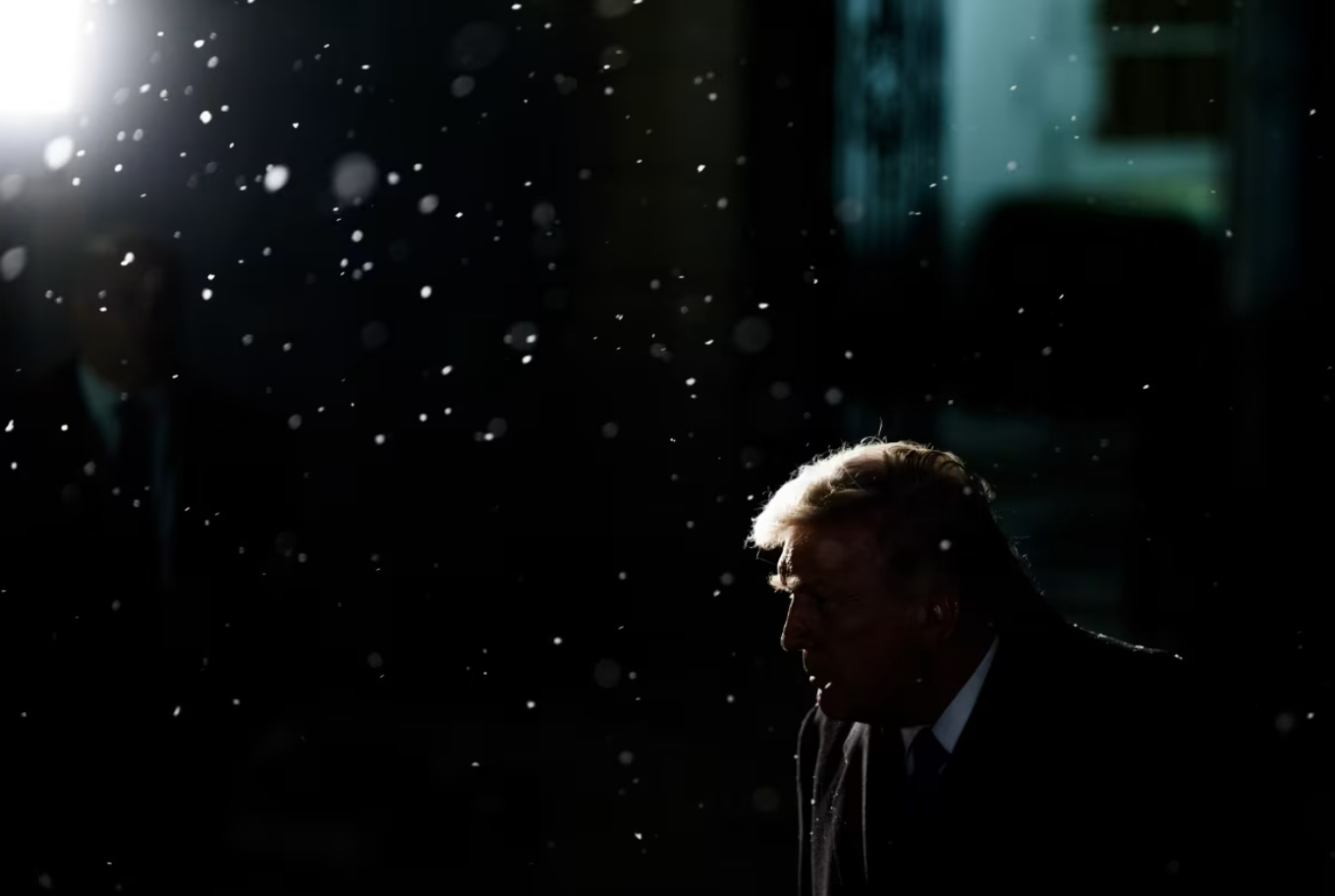
The most volatile president in living memory is becoming ever more driven by the whiplash of his personal whims.
The disciplined execution of the early months of President Donald Trump’s second term — when well-drafted executive orders reshaped Washington and America’s global priorities — are now a memory.
Shuttering USAID, gutting the federal government, and assaulting the Ivy League curriculum might have been controversial. But they sprang from a rational playbook drawn up during Trump’s four-year exile from the White House.
But lately Trump seems to be winging it more than usual. And he’s getting more extreme. His brittle temper in Washington — a contrast to his sunnier mood at weekends at home in Florida — is increasingly threatening.
How far he goes in his quest for dominance may depend on the tension between his strongman outbursts and domestic and international political realities that occasionally rein him in.
Just last week, Trump sparked outrage with the most racist messaging anyone can remember from a White House when a reposted cartoon video on his Truth Social account depicted Barack and Michelle Obama as apes.
Trump recently took fresh aim at elections, with America’s top intelligence official Tulsi Gabbard traveling to Georgia to search for evidence to prove his false obsession about fraud in 2020. He raised new concerns last week that he’ll try to fix November’s midterms by demanding the nationalization of voting.
At the same time, confusion mounted over the status of his migrant crackdown, after two US citizens were shot by federal agents sent to Minnesota. Trump’s now calling for a “softer touch.” But this may only be a rebrand to ease disastrous optics of a purge that alienated many voters. And the federal agents sent into city streets in khakis were the direct result of Trump’s relentless personal demands for the militarization of law enforcement.
Meanwhile, Trump’s fixation with his legacy and his manic efforts to plaster his name everywhere took another twist last week, when it was reported he wanted Dulles International Airport and New York City’s Penn Station renamed after him.
On Sunday, he went on another Truth Social tirade, slamming the Super Bowl half time show by Puerto Rican star Bad Bunny as an “Affront to the Greatness of America,” saying that “Nobody understands a word this guy is saying, and the dancing is disgusting, especially for young children.”
Earlier, the president had lashed out at US Olympic skier Hunter Hess who had said that just because he was “wearing the flag doesn’t mean I represent everything that’s going on in the US.” Trump wrote, “If that’s the case, he shouldn’t have tried out for the Team, and it’s too bad he’s on it.”
Now and again, Trump acts in a conventional, strategic manner — for instance with his unveiling last week of a TrumpRx website designed to lower drugs prices — although the plan is far more restrictive than he often claims.
But the impression of a president concentrating on his own, often erratic goals while being indifferent to the plight of ordinary voters is growing. He told NBC News in a Super Bowl interview aired Sunday, for example, that he was “very proud” of the economy, making a misleading case that he’d lowered grocery prices across the board. While the stock market has been in robust health — the Dow Jones Industrial Average closed above 50,000 last week for the first time — the Trump economy has yet to deliver its benefits to all income levels.
The political cost of this impulsive self-obsession is becoming clear. In a CNN poll last month, only 36% of Americans said the president had the right priorities, down from 45% near the beginning of his term. Only one-third of Americans said they believed that Trump cares about people like them, down from 40% last March and the worst rating of his political career.