The Kremlin launched its full-scale invasion of Ukraine on 24 February 2022. Outside Russia it was widely seen as an attempt to force Kyiv back into Moscow’s orbit and to overturn the entire post-Cold War security architecture in Europe.
The Russian leadership envisaged a short and successful military operation. It didn’t go to plan.
Four years later, Russia’s war on Ukraine grinds on. It has lasted longer than Nazi Germany’s brutal war on the Soviet Union, known here as the Great Patriotic War.
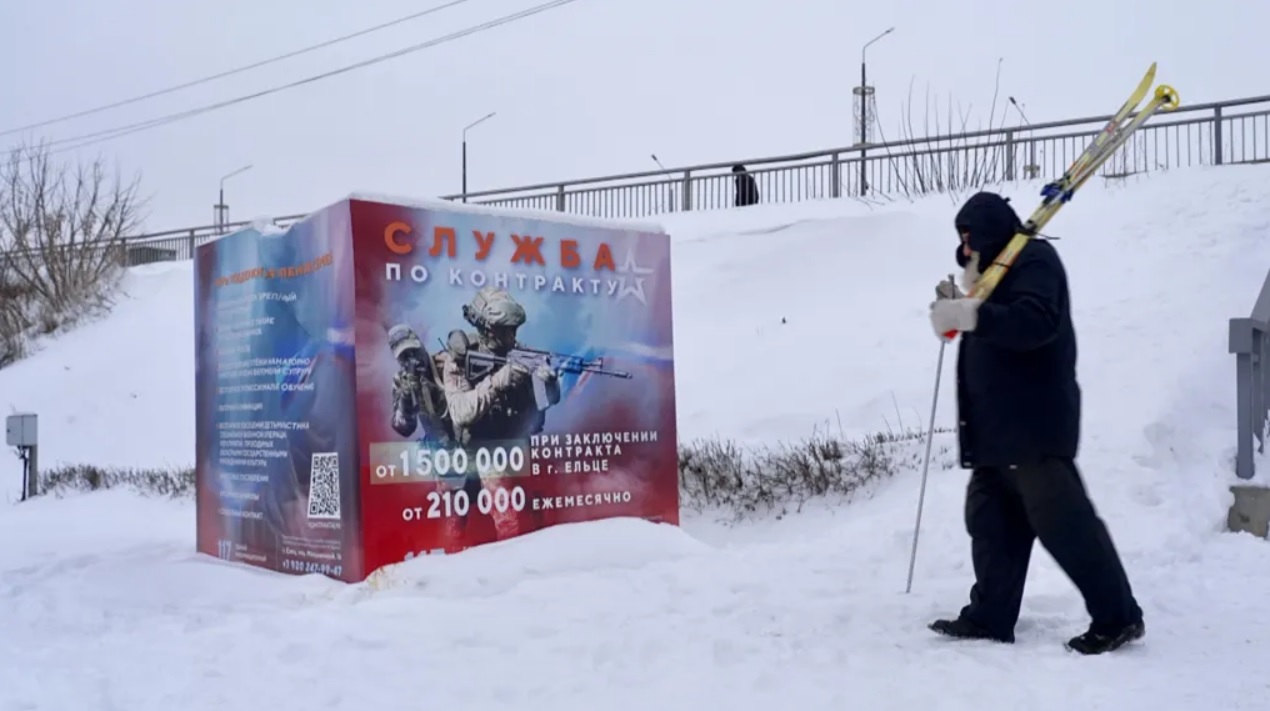
The Russian authorities do not release casualty figures for the so-called “special military operation”. But Russia is known to have suffered huge battlefield losses. So many of the towns and villages I’ve visited in the last two years have had museums and monuments dedicated to soldiers killed in Ukraine, as well as separate sections for recent war dead at local cemeteries.
The border with Ukraine is 250km away. But sometimes the front line feels much closer. This part of Russia, Lipetsk region, like many others, has been targeted by Ukrainian drones. Around Yelets the authorities have installed emergency shelters. I spot one at a bus stop, another in a park.
These concrete constructions stand like monuments to President Vladimir Putin’s “special military operation”. Before the Kremlin’s full-scale invasion of Ukraine there had been no need for shelters, since there had been no drone attacks on Russia.
Blocks of flats in Yelets have designated shelters, too, in basements.
Wars are financially draining. With Russia’s budget deficit growing and the economy stagnating, the government has raised VAT from 20% to 22%. The Finance Ministry says the extra revenue will be spent on “defence and security.”
Russians feel that life is getting harder. Few believe they have the power to change that. As the war enters its fifth year, there’s little optimism. Many people here are just hunkering down and waiting, hoping for better times.