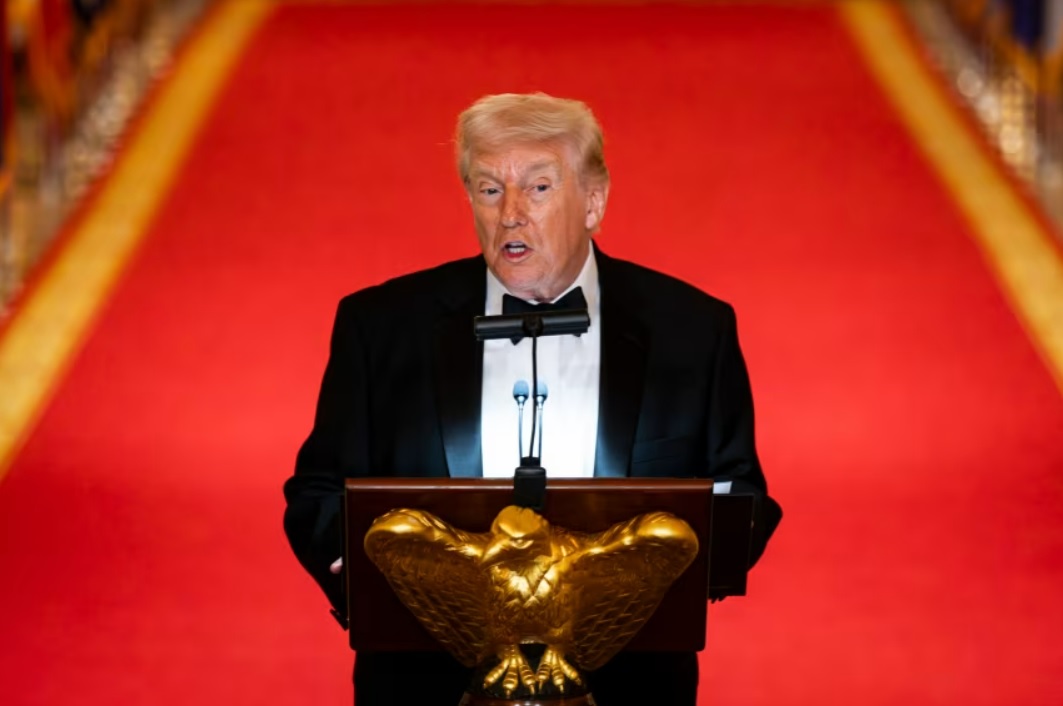
US President Donald Trump has imposed a new 10% global tariff to replace ones struck down by the Supreme Court, calling the ruling “terrible” and lambasting the justices who rejected his trade policy as “fools”.
The president unveiled the plan shortly after the justices outlawed most of the global tariffs the White House announced last year.
In a 6-3 decision, the court held that the president had overstepped his powers.
The decision was a major victory for businesses and US states that had challenged the duties, opening the door to potentially billions of dollars in tariff refunds, while also injecting new uncertainty into the global trade landscape.
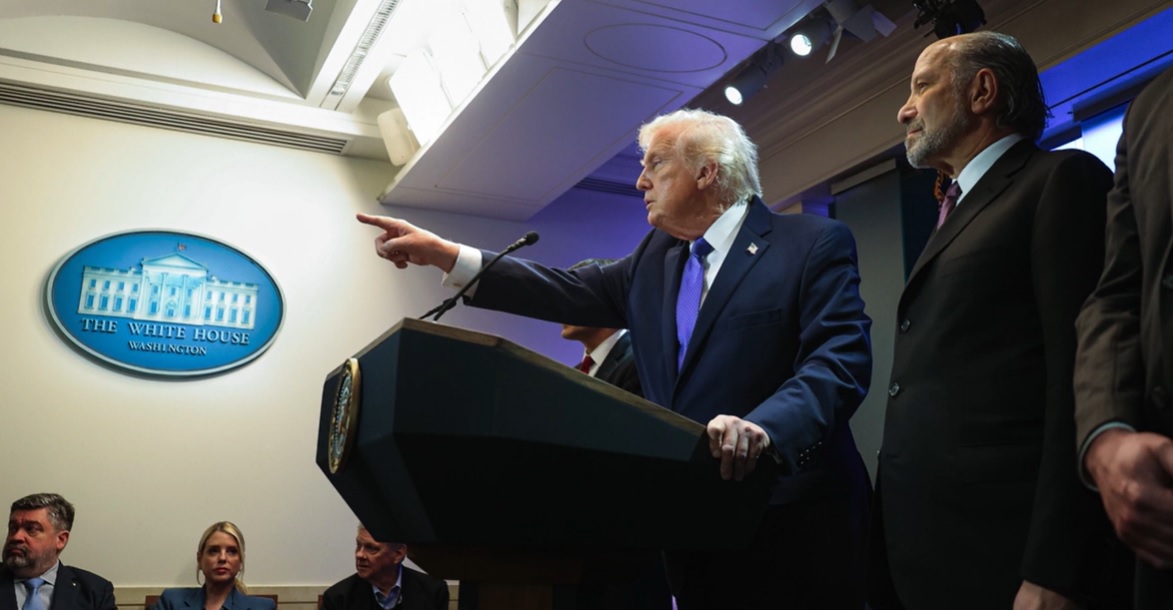
Speaking from the White House on Friday, Trump indicated that refunds would not come without a legal battle, saying he expected the matter to be tied up in court for years.
He also said he would turn to other laws to press ahead with his tariffs, which he has argued encourage investment and manufacturing in the US.
“We have alternatives – great alternatives and we’ll be a lot stronger for it,” he said.
The court battle was focused on import taxes that Trump unveiled last year on goods from nearly every country in the world.
The tariffs initially targeted Mexico, Canada and China, before expanding dramatically to dozens of trade partners on what the president billed as “Liberation Day” last April.
The White House had cited a 1977 law, the International Emergency Economic Powers Act (IEEPA), which gives the president power to “regulate” trade in response to an emergency.
But the measures sparked outcry at home and abroad from firms facing an abrupt rise in taxes on shipments entering the US, and fuelled worries that the levies would lead to higher prices.
Arguing before the court last year, lawyers for the challenging states and small businesses said that the law used by the president to impose the levies made no mention of the word “tariffs”.
They said that Congress did not intend to hand off its power to tax or give the president an “open-ended power to junk” other existing trade deals and tariff rules.
In his opinion, Chief Justice John Roberts, a conservative, sided with that view.
“When Congress has delegated its tariff powers, it has done so in explicit terms and subject to strict limits,” he wrote.
“Had Congress intended to convey the distinct and extraordinary power to impose tariffs, it would have done so expressly, as it consistently has in other tariff statutes.”
The decision to strike down the tariffs was joined by the court’s three liberal justices, as well as two justices nominated by Trump: Amy Coney Barrett and Neil Gorsuch.
Three conservative justices, Clarence Thomas, Brett Kavanaugh and Samuel Alito, dissented.
At the White House, Trump said he was “absolutely ashamed” of the Republican appointees on the court who voted against his trade policy.
He said they were “just being fools and lap dogs” and were “very unpatriotic and disloyal to our Constitution”.
Shares on Wall Street rose after the announcement, with the S&P 500 closing up about 0.7%, as businesses across the US cautiously welcomed the ruling.
“I feel… like a thousand-pound weight has been lifted off my chest,” said Beth Benike, the owner of Busy Baby products in Minnesota, which manufactures products in China.
Nik Holm, chief executive of Terry Precision Cycling, one of the small businesses involved in the case, called the ruling a “relief”.
“Though it will be many months before our supply chain is back up and running as normal, we look forward to the government’s refund of these improperly-collected duties,” he said.
California’s Democratic Governor Gavin Newsom said Americans deserved refunds from what he called the “illegal cash grab”.
“Time to pay the piper, Donald,” he wrote on X. “Every dollar your administration unlawfully took needs to be immediately refunded – with interest.”
His counterpart in Illinois, JB Pritzker, separately sent Trump an invoice demanding nearly $9bn (£6.6bn) in tariff refunds, equivalent to $1,700 per family in the state.
“Compensation is owed to the people of Illinois, and if you do not comply we will pursue further action,” he wrote.
The anticipated refunds and relief from tariff costs may prove elusive, however.
On Friday, Trump signed a proclamation imposing the new 10% tariff under a never-used law known as Section 122, which gives the power to put in place tariffs up to 15% for 150 days, at which point Congress must step in.
It will go into effect on 24 February.
The order states a variety of exemptions, including certain minerals, natural resources and fertilizers; some agricultural products like oranges and beef; pharmaceuticals; some electronics and certain vehicles.
For many of the categories of exempt goods, the order is broad and does not specifically say what items might be exempt.
Canada and Mexico will retain an exemption under a North American free trade pact, the USMCA, on tariffs covering a vast majority of goods.