Sadre Alam, 62, opens a thick maroon binder that holds the 30 or so documents he says he took to local officials to try and convince them of his right to vote: his grandfather’s land deeds from the 1920s; evidence his parents had voted decades ago; his army discharge certificate. To no avail.
“It feels strange to think my country is not mine today,” the former soldier told at his home in West Bengal state, where votes from the election he was barred from are now being counted. “That’s my pain. Everyone is asking me: ‘How did your name get excluded despite being in the army?’”
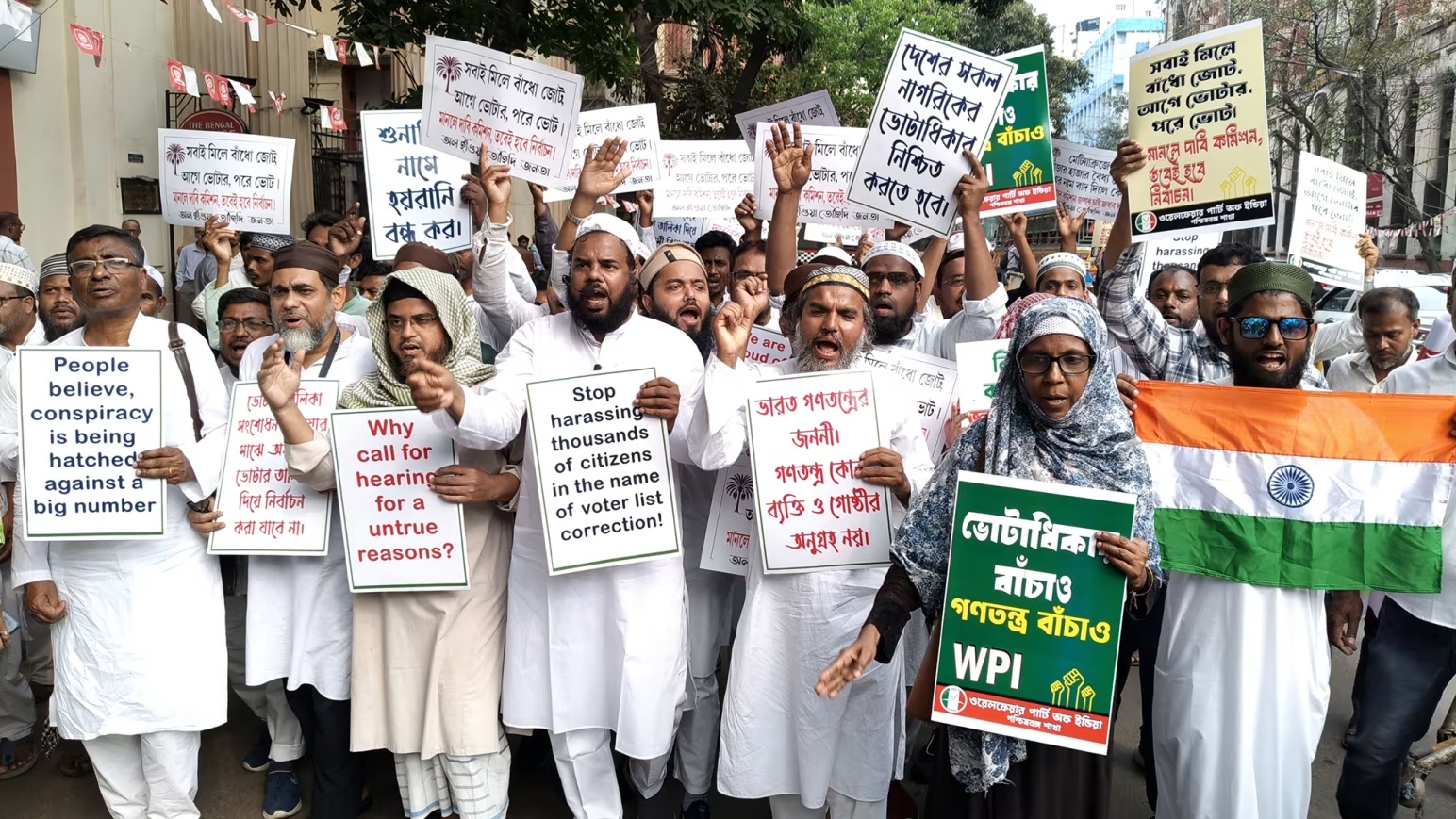
Alam and Suprabuddha are among more than nine million names to have been culled from West Bengal’s voter roll. Millions more were deleted nationwide just before a clutch of state elections across India that will decide whether the ruling Hindu-nationalist Bharatiya Janata Party (BJP) can make inroads in state houses in the country’s south and east, where it has traditionally struggled to gain power.
The BJP says the voter list clean-up is vital for removing duplications, the names of the deceased and other discrepancies, and preserving the integrity of India’s democracy. Critics say the Election Commission of India (ECI), which is meant to be an independent body, is acting at the behest of the BJP to advance its majoritarian agenda and weaken representation of India’s Muslim minority.
That’s made the voter roll controversy particularly combustive in West Bengal, where almost a third of the 90 million-strong population are Muslim and where the BJP has been making inroads in recent years.
Days before polls opened, Alam was told his name was no longer on the voter roll because officials had found a “logical discrepancy” in the 15-year age gap between his mother and him in the records.
The suggestion of a discrepancy is an insult, says the former soldier, who served in India’s brief 1999 war with neighbor and arch-rival Pakistan.
Suprabuddha Sen, 88, was not even told why he had lost the voting rights he’d held for decades.
It hurt even more given his personal links to the foundation of India’s democratic system following independence from British colonial rule in 1947.
His grandfather’s illustrations of Indian history and culture adorn India’s constitution; the iconic four-lion emblem that is the government’s official letterhead and is found on the cover of each Indian passport was designed by one of his students under his supervision.
“I can’t remember a time when we haven’t voted,” said his wife Deepa Sen – who was also removed from the voter roll without explanation.
Suprabuddha told he had submitted his graduation records, government pension documents, even an expired passport – but that officials did not budge.
“After that I don’t know what else I can give them.”
According to the Sabar Institute, a public policy and research group, about 2.4 million of the names deleted from the voting list in West Bengal are deceased, leaving around 6.7 million names.
Data on how many of those belong to eligible voters is hard to come by, but more than a dozen voters who said they had been struck off the list and were unable to get back on due to unclear rules and reluctant local officials.