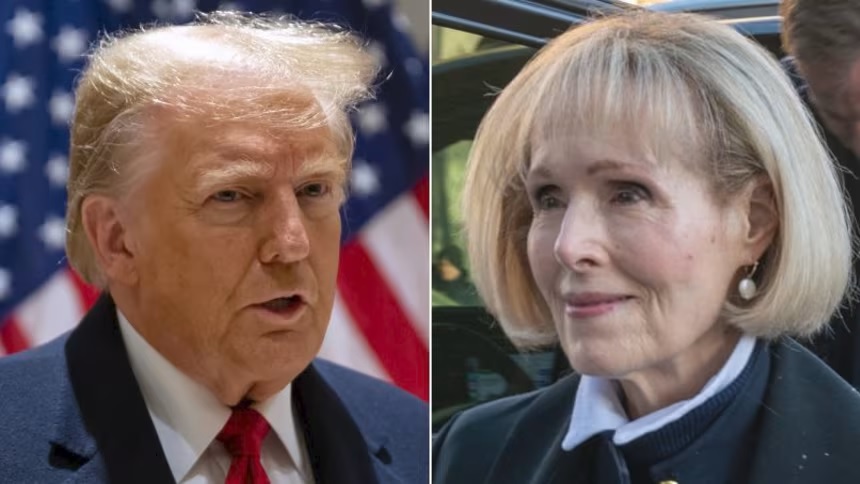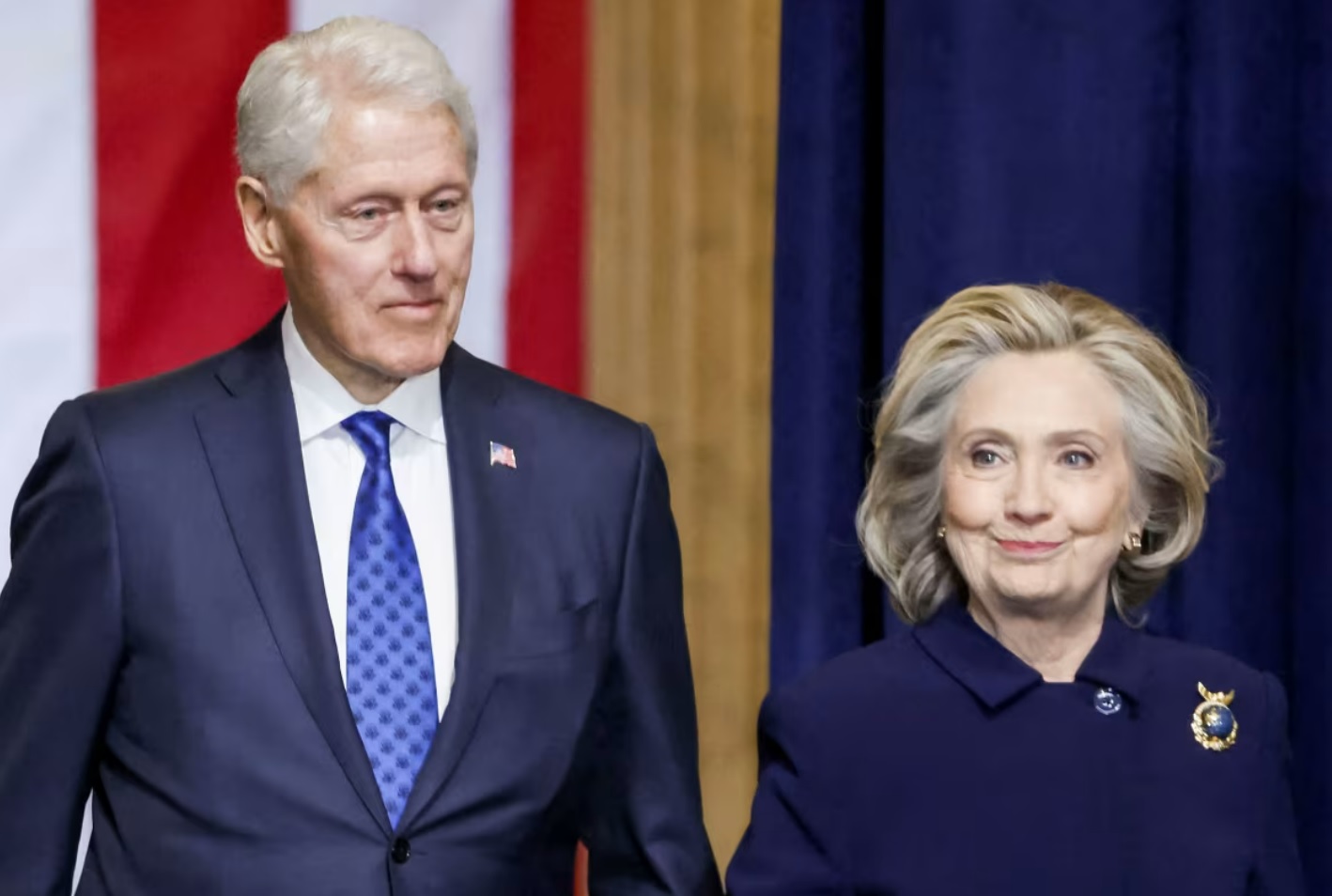
When former President Bill Clinton testifies to a congressional committee Friday on the Jeffrey Epstein scandal, he will be setting a precedent that President Donald Trump may come to regret.
The 79-year-old former president’s deposition follows the closed-door testimony of his wife, former Secretary of State Hillary Clinton, who on Thursday blasted the Republican-run House Oversight probe as a cover-up to protect Trump.
Neither of the Clintons nor Trump is accused by law enforcement of criminal wrongdoing in relation to Epstein. But the ex-president and the current one were both acquainted with him and are both mentioned multiple times in Justice Department files on Epstein.
The battle by Trump’s allies to draw the Clintons into their investigation was always destined to create bitter political theater, given their enormously high profiles and decadeslong histories of fierce duels with Republicans.
But their arrival before the committee also has the potential to backfire on the GOP. First, their involvement is offering new fuel to the Epstein saga, which the White House has been trying unsuccessfully to quell for months.
And the testimony of the Clintons is raising uncomfortable parallels that will discomfit Trump and his inner orbit. For instance, if the standard for required testimony is being mentioned in the Epstein files, why are prominent Republicans also mentioned in the files not being hauled before the committee? Commerce Secretary Howard Lutnick’s descriptions of his past interactions with Epstein were undercut by files released by the DOJ — but he has not so far received a subpoena to match those sent to the Clintons. There is no allegation of criminal wrongdoing against Lutnick.
Bill Clinton’s past contact with Epstein will surely interest the committee. But isn’t there a double standard if Trump, who was mentioned in the files numerous times, is not also put under oath?
And former Secretary Clinton’s appearance — although, in her telling, she had no information about Epstein’s conduct — creates a model of a spouse being asked about her husband’s links to the accused sex trafficker. Some observers might wonder whether first lady Melania Trump might have similar insight about the times her husband and Epstein moved in similar orbits before and after their marriage in 2005. While there would surely be a mighty constitutional fight over an attempt to compel testimony from a sitting president, the first lady has no formal constitutional role, and there appear to be no legal barriers to such a summons.
It is not unprecedented for a former president to testify to Congress.
19th-century President John Tyler was subpoenaed to appear in a probe into the misuse of public funds by his former secretary of state, Daniel Webster. Theodore Roosevelt testified before a congressional committee investigating antitrust issues in the steel industry in 1911 — one of a number of former presidents to appear as witnesses, according to a 1983 article by Stephen Stathis, an analyst in American history at the Congressional Research Service.
Trump refused a subpoena to testify to the House committee that investigated the January 6, 2021, riot by his supporters at the US Capitol. He sued to block the summons amid a fierce constitutional dispute over the separation of powers, and it was eventually withdrawn when the committee’s work ended.
Previous testimony by earlier presidents mostly focused on policy issues, whereas the deposition by Clinton touches on personal matters.
Democrats have already said they will deepen scrutiny into Epstein’s history if they win back the House majority in November’s midterm elections. Given the cycle of retribution that currently dominates US politics, it would be no surprise if they tried to compel testimony from Trump before, or after he leaves office.
Trump has appeared to empathize with the Clintons after his bitter former sparring partners were forced to give depositions. The precedent of family members being hauled before a congressional committee might be alarming for him, especially given the possibility of a Democratic House majority next year. And the principle that will be underscored on Friday — that a former president can be compelled to give testimony on a matter that has no obvious separation of powers issues — might complicate Trump’s own future once he’s left office.
House Oversight Committee Chairman James Comer denied he was running a partisan investigation. “This isn’t just Democrats,” he said. Comer noted that the panel had heard from former Labor Secretary Alex Acosta and former Attorney General Bill Barr. Both served during Trump’s first term. Acosta was the former US attorney for the Southern District of Florida who signed off on a controversial state plea deal for Epstein in 2008.
Democrats accuse Comer of running the investigation as a partisan ruse to shield Trump. But the tantalizing patterns established by the Clinton testimony mean it might become a liability for Trump by exacerbating intrigue about Epstein.
Hillary Clinton testified Thursday she had no information about Epstein’s alleged crimes and accused Republicans of making a false attempt to show transparency. “I had no idea about their criminal activities,” Clinton said of Epstein and Maxwell. She continued, “I do not recall ever encountering Mr. Epstein. I never flew on his plane or visited his island, homes, or offices. I have nothing to add to that.”
The former secretary of state reiterated that she had no answers to GOP questions about the former president’s relationship with Epstein. Comer said that she replied to questions with the words “I don’t know, you’ll have to ask my husband” more than a dozen times. He added: “We have a lot of questions for her husband tomorrow.”