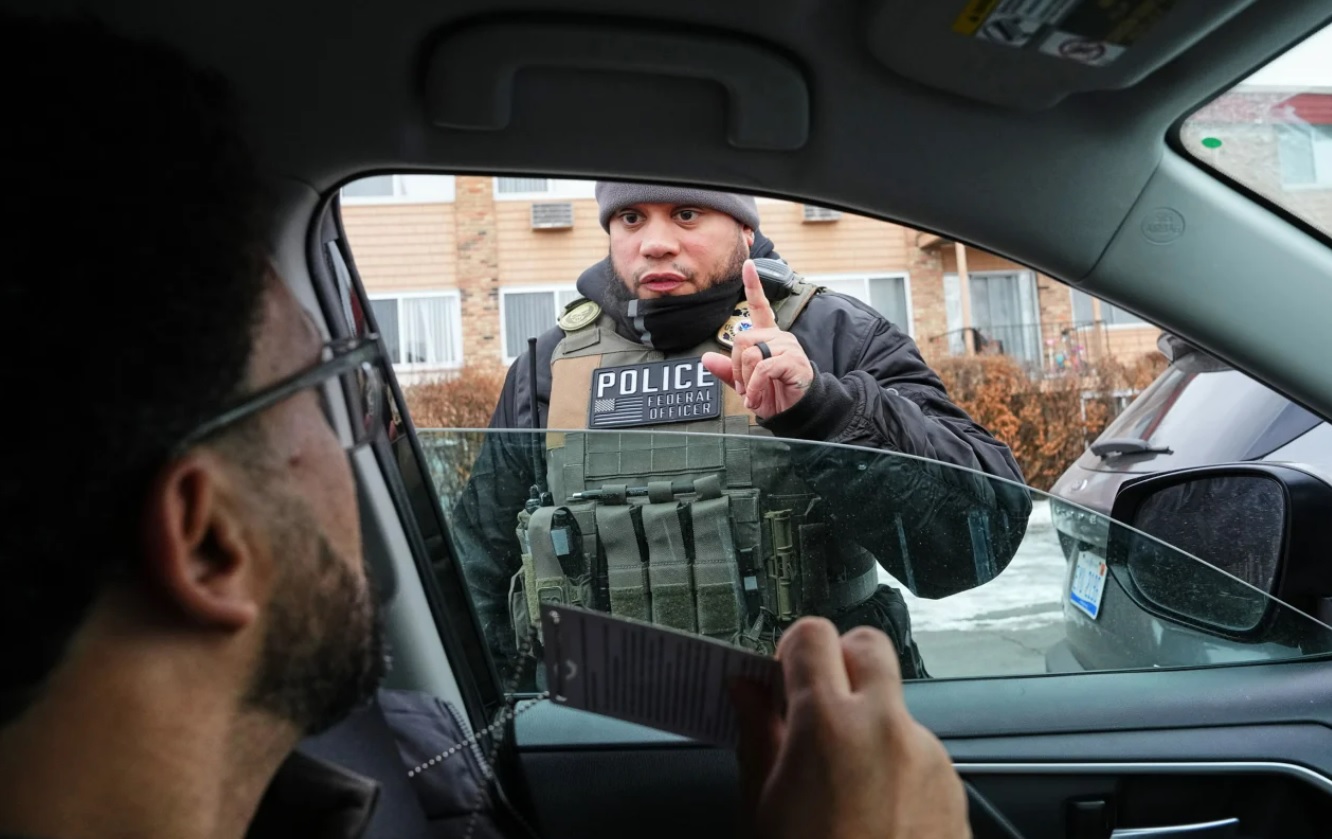
A pair of federal immigration agents clad in camouflage and masks approached Ryan Ecklund’s car on a snowy Minnesota street last month with a stark warning.
“You will not be following us anymore,” one agent told him, “or you will be arrested.”
When Ecklund continued tailing the agents’ beige SUV and recording them, he quickly found his status as a US citizen didn’t protect him from being pulled from his car and handcuffed. The agents drove him to an Immigration and Customs Enforcement office in Minneapolis and checked him into detention at a table labeled with a handwritten sign: “USC 111.”
As Ecklund later learned, the sign was a reference to a once-obscure federal statute, 18 US Code 111, that has become a key tool used by immigration agents to detain American citizens. As residents have sought to protest and document arrests in Minneapolis, Chicago and other cities by blowing whistles, blocking streets and recording agents, immigration officers have increasingly responded by arresting people for “impeding” their operations – claiming that those actions violate the law.
A CNN review of federal court records found that the Trump administration has dramatically expanded the use of the statute. Federal prosecutors in areas that have seen intense protests – the four districts covering Minneapolis, Chicago, Los Angeles, and Portland – charged about 12 times as many people under the statute in the first year of the Trump administration as they did in the last year of the Biden administration.
But these charges have often fallen apart under scrutiny, CNN found.
In Minneapolis, dozens of people – including Ecklund – have been arrested and detained for hours but never charged, according to attorneys working on the cases and court files. Several of the cases filed in recent weeks have already been dropped by prosecutors or reduced from felonies to misdemeanors.
In Los Angeles, all five of the prosecutions under the statute that have gone to trial since last summer have resulted in an acquittal. Many cases that didn’t go to trial there and in Chicago have been dismissed, ended in a plea deal or only resulted in a civil citation with a fine, while others are still pending.
While some of those charged allegedly violated other parts of the law, such as assaulting officers or resisting arrest, many others arrested were accused only of impeding agents while protesting their operations, attorneys said.
Dozens of cellphone and body camera videos reviewed by CNN show that immigration agents are routinely threatening to arrest people who follow or film videos of them, sometimes specifically citing the statute.
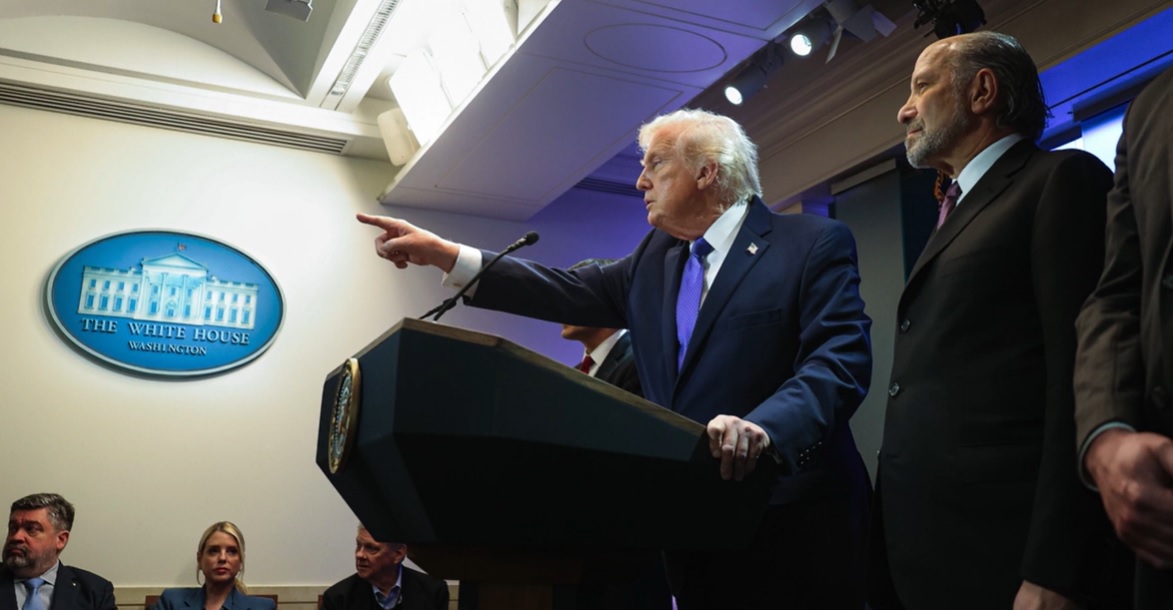
That’s despite senior Trump administration officials, including acting ICE chief Todd Lyons, acknowledging to Congress last week that recording agents in public and yelling at officers does not violate federal law.
Legal experts say the court records and videos show that the administration is often abusing the law to target activities protected by the First Amendment, rather than using it to defend federal officers.
“When you exercise your First Amendment rights, that’s not impeding,” said Minnesota civil rights attorney James Cook. “It seems like their end game is just to arrest dissidents and people that generally disagree with the current administration.”
The Department of Homeland Security cited an increase in assaults on federal law enforcement officers to explain the rise in arrests and charges under the law.
“It should come as no surprise that there’s an increase in referrals under 18 U.S.C. 111 as there’s been a massive increase in violence and threats against federal law enforcement,” a DHS spokesperson said in a statement.
Neither DHS nor the Department of Justice commented on questions about the relative lack of convictions under the statute compared to the number of arrests.
“There are myriad factors that affect the outcome of any given prosecution — the fact remains that anyone who assaults one of our officers is committing a felony, and anyone who obstructs them is committing a federal crime,” the DHS spokesperson said.
A DOJ spokesperson added that the department “will continue to seek the most serious available charge against anyone who puts federal agents in harm’s way” and said, “those who attack law enforcement will be held fully accountable for their actions.”