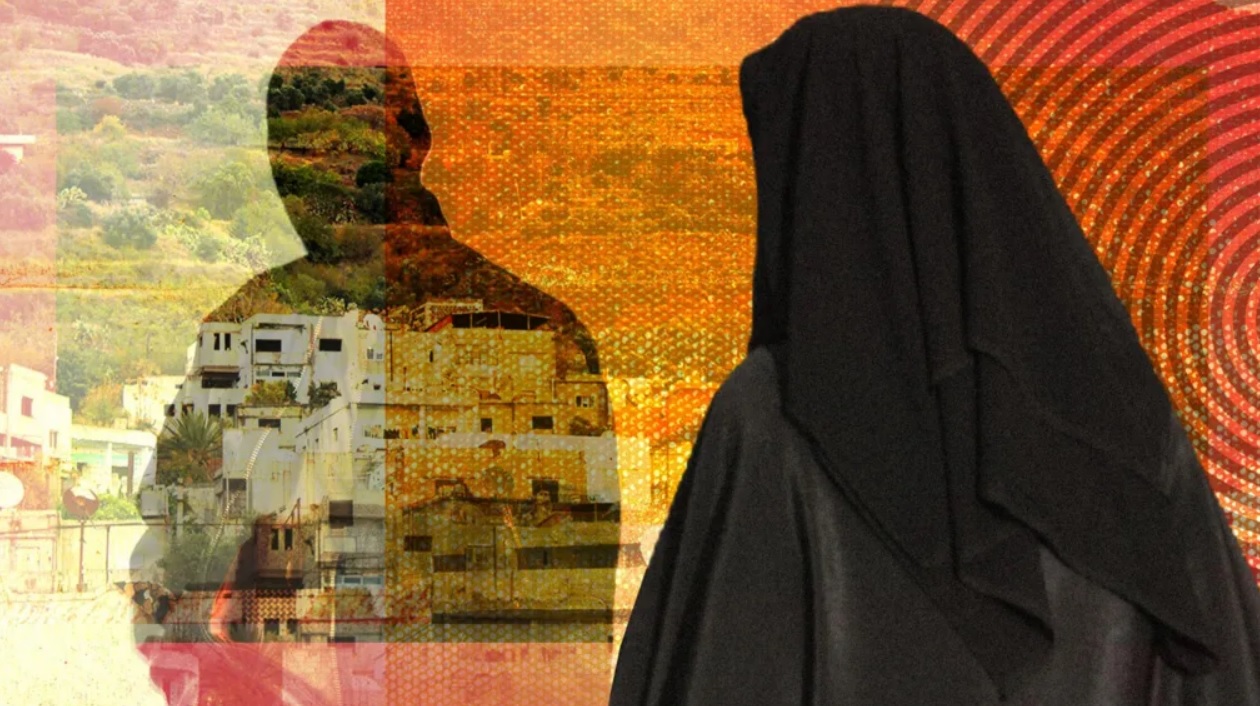
Ramia was preparing for a family picnic, on a warm summer day in her village in Latakia province in western Syria, when a white car drove up, she said.
Three armed men got out, saying they were government security forces, and dragged her into the vehicle, the teenager, whose name has been changed for her safety and to protect her identity, told the BBC World Service.
The men beat her, she said, hitting her harder when she started crying and screaming.
“One of them asked if I was Sunni or Alawite. When I said Alawite, they began insulting the sect,” she added.
Ramia is one of dozens of women reported kidnapped since the fall of the dictatorship of Bashar al-Assad in December 2024.
The Syrian Feminist Lobby (SFL), an advocacy group for women’s rights, says it has recorded reports – from families, media and other sources – of more than 80 women who have gone missing. It says it has confirmed 26 of those cases to be kidnappings.
Nearly all those reported missing are members of the Alawite sect, an offshoot of Shia Islam that makes up about 10% of Syria’s population and to which the ousted president belongs.
Two Alawite women and the families of three others have shared details of abduction and assault with the BBC. All their names have been changed for reasons of privacy and safety.
All of them said the interim government’s General Security Service – which is responsible for policing – had failed to investigate fully. One says its officers mocked her when she reported her ordeal.
The interior ministry’s spokesman said in November that it had investigated 42 alleged kidnappings, and found all but one were “false”. When contacted by the BBC, it said it had no further comment. However, a security source told the BBC that kidnappings had occurred, including some involving members of the security service, who he said had been dismissed.
The kidnappings and disappearances recorded by the SFL span a period from February 2025 to early December. This is both before and after March, when more than 1,400 people, mostly Alawite civilians, were killed in sectarian violence in the western coastal regions. Forces loyal to the Sunni Islamist-led government were accused of a wave of revenge killings following a deadly ambush by Assad supporters.
Many members of the Assad regime’s elite were Alawites, but other members of the sect faced repression for opposing the former president.
In July, Amnesty International said it had received credible reports of abductions and kidnappings of at least 36 Alawite women and girls, aged between three and 40, and had documented eight cases in detail.
In “almost all” the cases it documented, families “received no meaningful updates and no credible sense of progress on investigations,” deputy regional director Kristine Beckerle told the BBC.
Yamen Hussein, a Syrian human rights activist and writer based in Germany who has followed the issue, said survivors’ accounts showed the kidnappings had an ideological basis “built on the notion of violating the defeated side”, and aiming to “spread fear among Alawite women”.
However, a “general climate of impunity” had also encouraged groups with no ideological motive to carry out kidnappings, he added.
According to the Syrian Feminist Lobby, a small number of Druze and Sunni women were reported kidnapped, but were released later. It says 16 women – all of them Alawite – are still missing.
For the families the BBC spoke to, fear persists – both of retribution for speaking out and of social stigma associated with sexual assault.
Leen lives in constant anxiety, fearing knocks at the door, her mother said. Nesma’s marriage has collapsed. “I would scream in my sleep,” says Ramia. She says she is seeing a therapist but still struggles to sleep and “can’t find comfort”.
Ali told the BBC he and Noor were too afraid to seek justice, while Somaya said her daughter had returned to school, but “nobody around me knows anything about what happened”.
“We should not deny what happened to us but also we should not expose ourselves to danger,” she said.