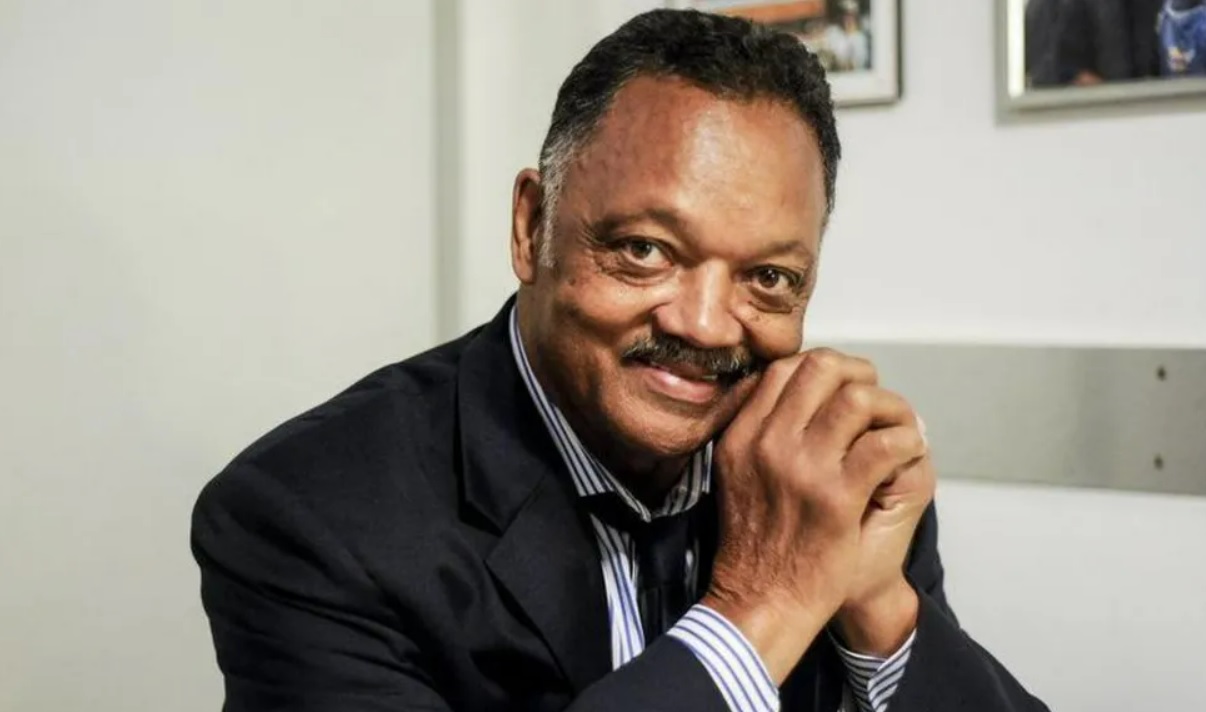
Jesse Jackson, a key figure during the US civil rights movement of the 1960s, was known for being the first African-American to make the jump from activism to major-party presidential politics.
A protege of Martin Luther King Jr, Jackson built a career around working to politically organise and improve the lives of African-Americans, and became a national force during his two White House campaigns.
While other African Americans sought the US presidency, Jackson was the first to find significant success at the ballot box – which would pave the way for those who came after, including Barack Obama and Kamala Harris.
Over the course of his career, Jackson built a movement to bring America’s increasingly diverse population together, with a message that centred on poor and working-class Americans.
“No one else in the Democratic Party was talking about a multiracial, multi-ethnic democracy,” Vermont Senator Bernie Sanders said at an event in Chicago in August 2024 that celebrated Jackson. “This movement wasn’t just about bringing us together, but about bringing us together around a progressive agenda.”
A gifted orator, Jackson articulated the frustrations of those who felt like second-class citizens in the world’s most prosperous democracy. His speech to the 1988 Democratic National Convention, which ended with the refrain “keep hope alive”, would be echoed decades later in the “hope and change” slogan of Obama’s successful 2008 presidential campaign.
After his historic run of presidential campaigns, Jackson went on to position himself as an elder statesman within the Democratic Party.
However, Jackson’s later years would be punctuated by scandal, including revelations of marital infidelity and financial impropriety involving his son and political heir, Jesse Jackson Jr, who served as a congressman from Illinois.
In 2017, the elder Jackson was diagnosed with Parkinson’s disease and largely withdrew from public life. That diagnosis was subsequently changed to one of progressive supranuclear palsy, a degenerative brain disease with similar symptoms.
Jackson was born Jesse Louis Burns on 8 October 1941 in Greenville, South Carolina – the son of 16-year-old Helen Burns. Unmarried, she was expelled from her local Baptist church after she became pregnant – the result of an affair with a 33-year-old married neighbour, Noah Robinson.
When Jackson was two, his mother married Charles Jackson, who went on to adopt his new stepson. Jesse Jackson remained in touch with Robinson, and regarded both men as his fathers.
Charles Jackson was a religious man, and his son was brought up in the church – a traditional focus for black political resistance since the time of American slavery.
Growing up in South Carolina, Jackson, like all black Americans, was segregated from his white neighbours. He was forced to attend separate schools and allowed only in designated areas in public places, like buses or restaurants.
In 1968, Jackson’s life changed dramatically. He was with his mentor at the Lorraine Motel in Memphis, Tennessee, when King was assassinated. Moments before the fatal shot, King was leaning over a railing in playful conversation with Jackson, who was standing in the parking lot below.
Jackson told reporters that he cradled King’s head as he died – although other witnesses did not confirm that account. The next day, Jackson controversially appeared on television with his clothes still stained with King’s blood, assuming the mantle of civil rights leadership.
“We were determined we would not let one bullet kill the movement,” he later said.
Jackson, like King had done in the years before his death, began speaking about America’s problems as rooted in class inequality as much as racism. The principal schism, he said, was between the haves and the have-nots.
“When we change the race problem into a class fight,” he told the New York Times, “then we are going to have a new ball game.”
Three years later, arguments over leadership led Operation Breadbasket to fracture and Jackson to form Operation PUSH (People United to Serve Humanity) – a new, wide-ranging civil rights group.
In the years that followed, Jackson became one of the most influential political figures in America.
His PUSH organisation championed inner-city education and affirmative action programmes that saw businesses employing black workers.
In 2024, Jackson applied for a presidential pardon for his son’s conviction, but was refused by then-President Joe Biden.
That year, the veteran campaigner also returned to the political realm he loved, making a rare appearance at the Democratic convention in Chicago, where the party officially nominated Kamala Harris for president.
High-profile delegates paid tribute to a man they said had done much to ensure a black woman had a significant chance of reaching the White House. Harris later lost the 2024 election to Donald Trump.
“We learned at his feet,” said Al Sharpton, a fellow veteran civil rights activist who had worked with Jackson at Operation Breadbasket decades earlier.
Pramila Jayapal, a congresswoman from Washington state, addressed him as she spoke at the convention, saying: “For every elected official we will see on that stage – we are here because you laid the path for us.”