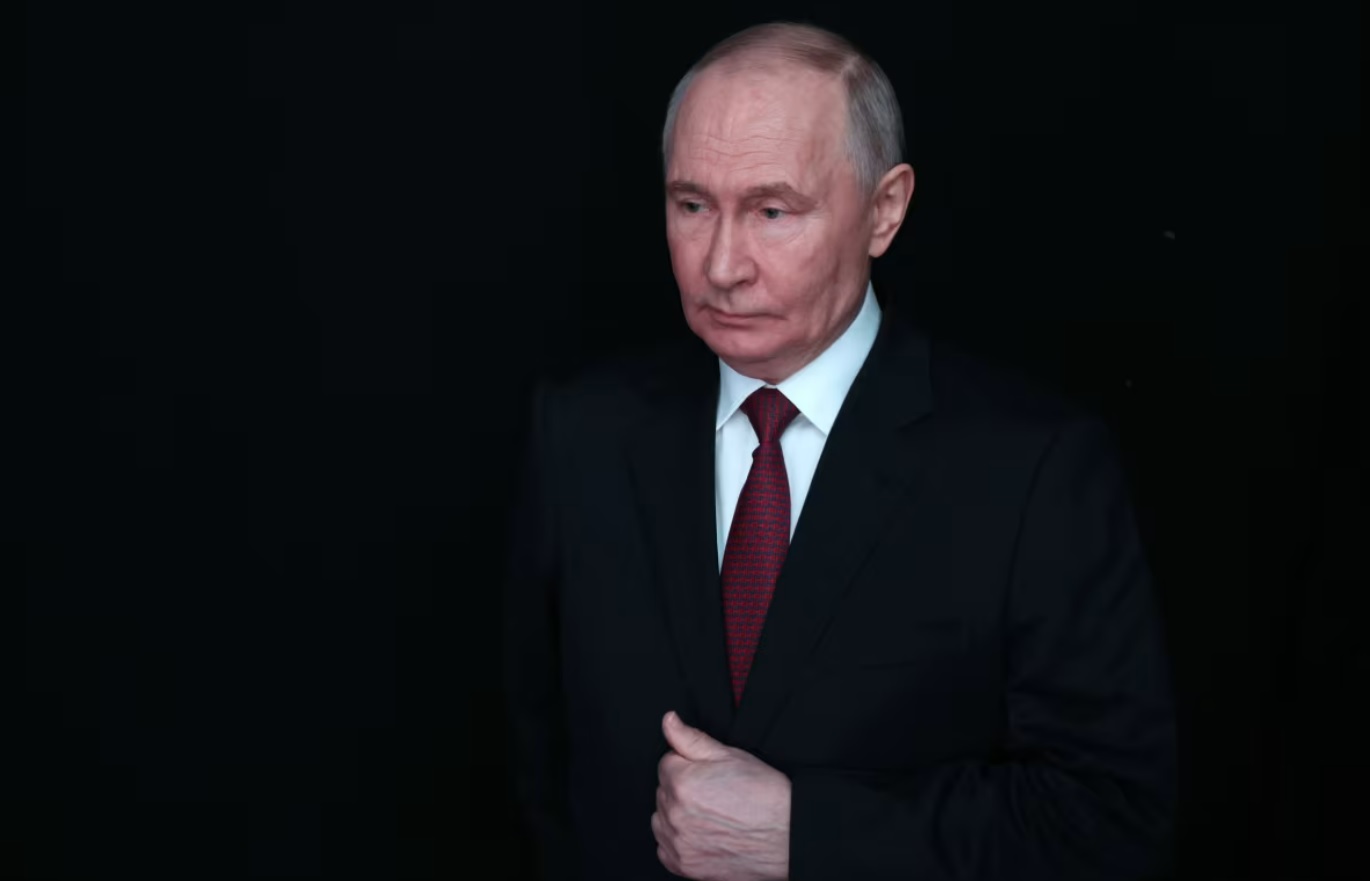
Jeffrey Epstein had a message he wanted to get to Russian President Vladimir Putin.
It was June 2018 – about a year after Russia’s ambassador to the United Nations Vitaly Churkin had suddenly died. Churkin had been someone Epstein met with regularly in New York, according to new documents released by the Department of Justice, and Epstein had even offered to help Churkin’s son, Maxim, get a job at a wealth management firm in New York.
Now Epstein was looking to talk with a different Russian official: Foreign Minister Sergey Lavrov. On June 24, 2018, Epstein emailed Norwegian politician Thorbjørn Jagland, then the secretary general of the Council of Europe, “I think you might suggest to putin, that lavrov, can get insight on talking to me. vitaly churkin used (to) but he died. ?!”
Jagland answered that he would meet with Lavrov’s assistant the following Monday and suggest it.
Epstein replied: “churkin was great. he understood trump after [our] conversations. it is not complex. he must be seen to get something its that simple.”
While Epstein’s interest in scouting models from Russia and other parts of Eastern Europe had previously come to light, the latest release of documents related to the disgraced financier offers new insight into his attempts to draw closer to high-ranking Russian officials, including Putin, who Epstein tried to meet or speak with multiple times.
The new tranche of documents showing more of Epstein’s communications with international politicians, including Russian officials, has led to more speculation about the billionaire’s motives. Polish Prime Minister Donald Tusk said in a cabinet meeting this week that his country will be launching an investigation into Epstein’s possible ties with Russian intelligence.
“More and more leads, more and more information, and more and more commentary in the global press all relate to the suspicion that this unprecedented pedophilia scandal was co-organized by Russian intelligence services,” Tusk said.
“I don’t need to tell you how serious the increasingly likely possibility that Russian intelligence services co-organized this operation is for the security of the Polish state,” Tusk added. “This can only mean that they also possess compromising materials against many leaders still active today.”
The Kremlin dismissed suggestions that Epstein was a spy for Russia.
“The theory that Epstein was controlled by Russian intelligence services can be taken in any way, but not seriously,” Kremlin spokesman Dmitry Peskov said on Thursday. Peskov added that reporters should “not waste time” looking into allegations Epstein had links to Russian intelligence.
Analysts cautioned to CNN that the documents suggest little more than Epstein trying to rub shoulders with influential figures and position himself as a sort of geopolitical power player.
The documents do not indicate whether Epstein ever succeeded in connecting with the Russian leader.
On May 9, 2013, according to the documents, Epstein wrote to former Israeli Prime Minister Ehud Barak that Jagland “is going to see putin in sochi ” on May 20 and that Jagland asked if Epstein would make himself available to meet with the Russian president “to explain how russia can structure deals in order to encourage western investment.”
“I never met him, wanted you to know,” Epstein added in his email to Barak.
A few days later, Jagland told Epstein on May 14, 2013, that he planned to pass a message to Putin on Epstein’s behalf that Epstein could be useful. “I have a friend that can help you to take the necessary measures (and then present you) and ask [whether] it is interesting for him to meet with you,” Jagland wrote in an email to Epstein.
Epstein replied: “He is in a unique position to do something grand, like sputnik did for the space race, You can tell him that you and I are close , and that i advise Gates . this is confidential, . I would be happy to meet him , but for a minimum of two to three hours, not shorter.”
Through a spokesperson, billionaire Bill Gates has publicly described meeting with Epstein as a “serious error in judgment” but denied any improper conduct.
But in another email to Barak on May 21, 2013, Epstein claimed without providing evidence that he denied a request from Putin to meet during a Russian economic conference in St. Peterburg. Epstein said that if Putin wanted to meet with him, he would “need to set aside real time and privacy.” (It’s unclear if Putin indeed ever requested to meet with Epstein.)
CNN has reached out to the Kremlin for comment on Epstein’s correspondence with Barak.
More than a year later, in July 2014, an email to Epstein suggests that he had an upcoming scheduled meeting with Putin and had invited the LinkedIn founder to join. Joi Ito, then the director of the MIT Media Lab, wrote to Epstein, “I wasn’t able to convince Reid to change his schedule to go to meet Putin with you. ;-)”
Ito previously issued an apology for his association with Epstein and for accepting funding for the MIT Media Lab.
Some of Epstein’s communications with prominent Russians came at a sensitive time in US-Russia relations – after the US intelligence community accused Russia of interfering in the 2016 presidential election, which Donald Trump won.